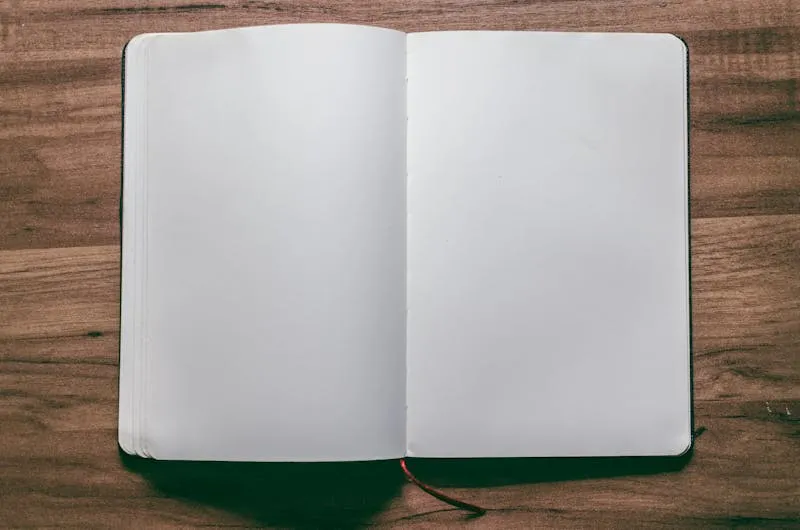
Midori MD Notebook (A5)
Midori / DesignphilThe best general-purpose notebook we have ever used. MD Paper handles every pen type beautifully, the thread-sewn binding is flawless, and the minimal design gets out of your way.
Best for: Multi-pen writers, journalers, fountain pen users, minimalists
- Cream-colored MD Paper (~70gsm) handles all pen types
- Thread-sewn binding opens perfectly flat at 180°
- 176 pages (88 sheets)
- Available in blank, lined, and grid ruling
- Minimal paraffin wax cover design
The Midori MD Notebook has a quiet reputation. It doesn’t have the cult following of the Hobonichi Techo or the visual drama of a Traveler’s Notebook. It doesn’t go viral on social media. What it does is sit on desks and in bags around the world, being used — daily, devotedly, by people who’ve tried everything else and settled on this.
We’ve been using Midori MD Notebooks as our primary daily notebooks for over two years now. We’ve filled more than a dozen of them with meeting notes, journal entries, project plans, and random thoughts. After thousands of pages, here’s our honest assessment of whether the MD Notebook deserves its reputation as Japan’s best all-around notebook.
Quick Verdict: Yes. The Midori MD Notebook is the best general-purpose notebook we’ve ever used. The paper handles every pen type beautifully, the binding is flawless, and the minimalist design gets out of your way and lets you focus on writing. At $12 for an A5, it’s not the cheapest option — but the paper quality justifies every cent. Rating: 4.7 / 5.0
Product Overview
The Midori MD Notebook is made by Designphil (formerly Midori Co.), the same company behind the Traveler’s Notebook and MD Paper products. “MD” stands for “Midori Diary” — the original product line from the 1960s that eventually evolved into this notebook series.
The notebook is intentionally minimal: a simple cream-colored paraffin wax cover, thread-sewn binding, and 176 pages of Midori’s proprietary MD Paper. No logos on the exterior, no branding on the pages, no unnecessary elements. Just paper and binding, done exceptionally well.
Approx. ~$12 (A5) Brand: Midori / Designphil Origin: Japan Pages: 176 (88 sheets) Paper: MD Paper, cream, ~70gsm Sizes: A4, A5, B6 Slim, A6 Ruling: Blank, Lined, Grid
Paper Quality
This is why people buy the Midori MD Notebook, and it’s where the review should spend the most time.
MD Paper is cream-colored, smooth, and engineered for writing. It’s not as thin or dramatic as Tomoe River (used in the Hobonichi), and it’s not as thick and substantial as Rhodia or Clairefontaine. It sits in a perfect middle ground — substantial enough to feel solid under your pen, smooth enough to let any writing instrument glide.
Fountain Pen Performance
MD Paper handles fountain pens beautifully. We tested with a Pilot Kakuno (medium nib), a TWSBI Eco (fine nib), and a Sailor Pro Gear (medium-fine nib). Results:
- Bleed-through: None. Even with wet nibs and saturated inks, we couldn’t push ink through to the other side.
- Feathering: Essentially none. Lines stay crisp and defined.
- Ghosting: Minimal. There’s a faint shadow visible on the reverse side, but it’s subtle enough to write over without distraction.
- Dry time: Moderate — about 5-10 seconds depending on ink wetness. Faster-drying inks set sooner.
- Sheen/shimmer: Some sheening inks do show slight sheen on MD Paper, though not as dramatically as on Tomoe River. It’s a nice bonus.
For fountain pen users, MD Paper is an excellent daily-writing paper. It doesn’t show off your ink the way Tomoe River does, but it provides a more solid, traditional writing feel with virtually zero compromises on performance.
Gel Pen Performance
Gel pens are where MD Paper arguably performs its best. The Pilot Juice Up (0.4mm), Pentel EnerGel (0.5mm), and Uni-ball Signo (0.38mm) all produced clean, vibrant lines with zero bleeding and negligible ghosting. The smooth surface lets gel ink flow consistently without the occasional skip or thin patch that cheaper papers can cause.
Colors appear slightly richer on MD Paper’s cream background compared to bright white paper — particularly warm tones like reds, oranges, and browns. If your gel pen collection leans toward earthy or warm colors, MD Paper makes them look fantastic.
Ballpoint and Pencil Performance
Ballpoints (tested with Uni Jetstream 0.7mm) write smoothly without the drag that rough papers create. The surface has just enough texture to grip ballpoint ink without being scratchy.
Pencils perform well but not exceptionally — the surface is slightly too smooth for optimal graphite grip. If pencils are your primary instrument, the Apica Premium C.D. Notebook is a better choice. But for occasional pencil use, MD Paper is perfectly fine.
Highlighter and Marker Performance
Zebra Mildliners and Tombow Dual Brush Pens both performed excellently — no bleed-through, no feathering, and consistent color application. This matters for journalers and bullet journal users who layer multiple pen types on the same page. MD Paper handles mixed media without any issues.
Design & Build Quality
Binding
The Midori MD uses thread-sewn (section-sewn) binding, which is the gold standard for notebooks. The book opens completely flat at 180° and stays open without holding the pages down. This is essential for comfortable writing and absolutely critical for two-page spreads in journals and planners.
After filling over a dozen MD Notebooks, we’ve never had a binding failure — no loose pages, no separating sections, no spine cracking. The binding is built to last.
Cover
The cover is made from paraffin wax-coated paper. Out of the box, it’s clean and minimal — a plain cream surface with no exterior text or branding. Over time, the wax coating develops a subtle patina from handling, which adds character.
It’s not a durable cover by any means — this isn’t a leather-bound journal. But it’s intentionally designed to be lightweight and unobtrusive. Midori sells separate paper and fabric covers if you want protection, or you can simply embrace the natural wear.
Size Options
The A5 (148 × 210mm) is the most popular size and our recommendation for most users. It’s large enough for comfortable writing and detailed layouts, but compact enough to carry in a bag.
The B6 Slim (105 × 175mm) is a pocket-friendly option that’s surprisingly enjoyable to write in. The A4 is ideal for sketching and detailed note-taking. The newer A6 is ultra-compact for on-the-go jotting.
Pros & Cons
What We Love:
- MD Paper handles every pen type — fountain pens, gel pens, ballpoints, markers — beautifully
- Thread-sewn binding opens perfectly flat at 180°
- Minimal, elegant design that doesn’t distract
- Cream paper enhances warm ink colors
- Virtually zero bleed-through, even with wet fountain pen inks
- Available in blank, lined, and grid ruling
- Good page count (176 pages) for the price
Room for Improvement:
- Paraffin cover isn’t durable without a separate protective cover
- Only one paper color (cream) — no bright white option
- Slightly expensive compared to budget options like Kokuyo Campus
- Not ideal for pencil-heavy use (too smooth for optimal graphite grip)
- Limited page count compared to 200+ page competitors
Who Should Buy the Midori MD Notebook?
- Writers who use multiple pen types — If you switch between fountain pens, gel pens, and markers, the MD handles all of them without compromise.
- Journalers and bullet journalers — The flat-opening binding, quality paper, and grid option make it ideal for journaling.
- Fountain pen users — Excellent performance without the ghosting and thinness of Tomoe River paper.
- Minimalists — The understated design appeals to people who want a notebook, not a fashion statement.
- Skip if: You’re on a tight budget (get the Kokuyo Campus at $3.50), you primarily use pencils (get the Apica C.D.), or you want a structured planner format (get the Hobonichi Techo).
Where to Buy
Also available at JetPens (widest selection of sizes and ruling options) and select Kinokuniya locations.
Buying Tips:
- The A5 Grid is the most versatile option for new buyers
- JetPens offers the full size and ruling range if Amazon doesn’t have your preferred variant
- Midori’s separate paper covers ($3-5) are worth adding if you carry the notebook in a bag
How It Compares
The Midori MD’s closest competitors are the Leuchtturm1917 (more features like numbered pages and index, but inferior paper), the Rhodia Webnotebook (excellent paper, but harder cover doesn’t flex), and the Life Noble Notebook (comparable paper quality, but more expensive and fewer size options).
Against the Hobonichi Techo, it’s a different category — the Hobonichi is a structured daily planner with Tomoe River paper, while the MD is an open-format notebook. Both are excellent; they serve different purposes. For a detailed head-to-head comparison with Kokuyo’s offering, see our Kokuyo Campus vs Midori MD article.
For more notebook options, see our 7 Best Japanese Notebooks guide.
Frequently Asked Questions
Is Midori MD paper the same as Traveler’s Notebook paper?
The Traveler’s Notebook refills use MD Paper, so the paper quality is essentially the same. The main differences are format (bound notebook vs. slim refill insert) and cover (paraffin wax cover vs. leather cover). If you love MD Paper but want a modular system, the Traveler’s Notebook gives you that option.
How does MD Paper compare to Tomoe River paper?
MD Paper (~70gsm) is thicker, has less ghosting, and feels more substantial. Tomoe River (52gsm) is thinner, shows more dramatic ink sheen, and has more ghosting. MD Paper is better for everyday writing across all pen types. Tomoe River is better for fountain pen enthusiasts who want to see their ink at its most dramatic. We prefer MD Paper for daily use and Tomoe River for special occasions.
How many pages does the Midori MD Notebook have?
176 pages (88 sheets). At daily use, that’s roughly 3-6 months depending on how much you write per day. It’s enough for a single journal or project, but heavy writers may go through them faster.
Can I use watercolors or wet media in the Midori MD?
Light watercolor washes are possible — the paper holds up reasonably well with a controlled amount of water. However, heavy watercolor application will cause warping and potential bleed-through. For dedicated watercolor use, a watercolor-specific paper or sketchbook is a better choice. The MD Notebook is optimized for writing instruments, not wet media.
Is the Midori MD worth it over a Moleskine?
In our experience, yes. The MD Paper is significantly smoother and more ink-friendly than Moleskine’s paper, which is known for fountain pen feathering and bleed-through. The MD’s thread-sewn binding also opens flatter. At $12 vs $15-20 for a comparable Moleskine, the Midori MD is both cheaper and better — a rare combination.
Final Verdict
The Midori MD Notebook does one thing extraordinarily well: it provides a beautiful, reliable surface for writing with any instrument. It doesn’t try to be a planner, a sketchbook, or a lifestyle brand. It’s a notebook — and it’s the best notebook we’ve found for the simple act of putting pen to paper.
Two years and a dozen notebooks later, we still reach for the Midori MD every time we need a new notebook. The paper is universally excellent, the binding is flawless, and the minimal design respects the work you put on its pages. At $12, it’s not the cheapest option — but it’s the best value in premium notebooks, and we recommend it without reservation.
Rating: 4.7 / 5.0